Recreational vehicles represent freedom on the open road — but they also represent some of the heaviest, most valuable loads most people will ever tow. A motorhome towing a car, a travel trailer, or a fifth-wheel demands hardware engineered for sustained stress, long distances, and the safety of everyone behind you. With over 20 years supplying the RV, marine, and automotive industries, FTrade understands exactly what “built to last” means for recreational towing. This complete guide covers the trailer hardware and safety equipment every RV owner needs.
RV Towing Demands Heavy-Duty Couplers and Hitches
An RV setup lives its life under constant load. The coupler and hitch are not places to cut corners.
Selecting the Right Trailer Coupler
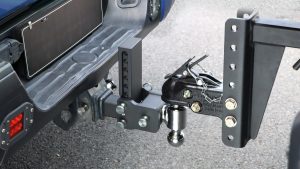
The coupler is the heart of your connection. For larger RV trailers, a properly rated coupler matched to the correct ball diameter (most often 2″ or 2-5/16″) is non-negotiable. FTrade manufactures the FT-TB series of trailer hitch balls in those exact sizes, with shank options to fit heavy-duty mounts. The coupler must be stamped with a GTW rating that exceeds your trailer’s fully loaded weight — and the latch must close with a positive, audible click every single time you connect. When towing near the upper limit of your rating, also consider a weight-distribution setup that spreads tongue weight across the tow vehicle’s axles for steadier handling and reduced sway. FTrade’s coupler and ball combinations are designed to pair cleanly with these systems, giving you a balanced, predictable rig whether you are crossing a mountain pass or battling crosswinds on the plains.
Pintle Hook Systems for Large RVs
For the heaviest RV and toy-hauler applications, pintle hook systems offer superior strength and articulation over rough roads. FTrade’s pintle hooks — including the FT-PH-TH-001 and FT-LE-TH-001 hitch receiver pintle hooks and tow eyes — mount into standard receivers and provide the rugged engagement that long-haul RV enthusiasts prefer. Combined with a lunette ring, they deliver a connection that shrugs off the flex and bounce of thousands of highway miles.
Trailer Hitch Balls Built for Long Hauls
RV towing subjects balls to constant radial and vertical load. A poorly finished ball will wear a coupler prematurely and can even crack under fatigue. FTrade’s trailer hitch balls are machined and finished for smooth, consistent contact and long service life, with the capacity ratings clearly marked so you can match them to your rig without guesswork.
RV Towing Safety Equipment Checklist
Beyond the hitch itself, a responsible RV setup includes redundant safety systems.
Breakaway Systems and Safety Chains
A breakaway system applies the trailer brakes if the coupler ever separates from the tow vehicle — and safety chains are the mechanical backup that keeps the trailer from completely departing. Cross your chains beneath the tongue and keep them clear of the ground. FTrade supplies rated chains and tethers engineered for the high loads RV trailers impose, giving you the redundancy that regulations and common sense both require.
Anti-Theft Hitch Locks and Covers
RVs are often stored or parked for long stretches, making hitches and trailers attractive theft targets. FTrade’s anti-theft hitch and coupler locks physically block unauthorized coupling, while our black trailer hitch covers (FT-RB-HC-001/002/003) keep receivers clean during storage. Together they protect your investment through the off-season and at every overnight stop.
Trailer Lights and Wiring
Visibility is safety. A fully functional lighting and wiring harness — tail, brake, turn, and especially the increasingly standard LED marker lights — keeps your RV trailer visible to every driver around you. Inspect connectors for corrosion before each trip; a dead ground wire is the most common cause of intermittent trailer lighting failures on the road. Carry spare fuses and a test light, and learn the basic seven-pin versus four-pin layouts so you can diagnose a fault at a rest stop rather than a repair shop. A small amount of dielectric grease on each connection keeps moisture out and is the single best prevention against the green creeping corrosion that silently kills a lighting circuit.
RV Towing Maintenance for the Long Road
RVs cover more miles in a season than most trailers see in a lifetime, so maintenance cannot be an afterthought.
Inspecting Tow Clamps and Receivers
Periodically remove the hitch and inspect the receiver bore, the tow clamp (FTrade’s FT-CS-HT series), and the coupler for elongation, cracks, or mushrooming of bolt holes. A receiver that has been hammered by a loose hitch will eventually fail to hold the component securely. Catching wear early prevents a roadside emergency hundreds of miles from home.
Lubrication and Corrosion Protection
RV hardware faces rain, road salt, and the occasional ferry crossing. Keep the hitch ball and coupler contact surfaces greased, treat pintle hook pivots, and consider FTrade’s Hitch Receiver Silencer Pad (FT-SP-001) to reduce the constant micro-movement that accelerates wear. A little corrosion protection goes a long way toward a rig that still looks and performs like new after years of travel. At least once a season, pull the hitch fully apart and inspect the hidden surfaces you never see on the road — the inside of the receiver, the underside of the coupler, and the pivot of any pintle hook. Catching a thin rust line or a hairline crack there, before it spreads, is what separates a rig that ages gracefully from one that fails without warning.
Final Word
RV towing is a long-term relationship between your vehicle and your hardware. Choose components rated for the load, back them up with proper safety equipment, and maintain them with discipline — and your rig will reward you with thousands of worry-free miles. From trailer hitch balls and pintle hooks to anti-theft locks, safety chains, and silencer pads, FTrade builds the RV towing essentials trusted worldwide.