Container ship Ever Smart lost 42 containers and sustained damage to another 34 units in heavy seas. Root‑cause analysis pointed to improper cargo securing: lashings were incorrectly fastened and crew members failed to follow the vessel’s Cargo Securing Manual, putting crew lives at serious risk.
Regular maintenance and inspection of cargo securing equipment prevents such accidents. Systematic checks on twist locks, lashing rods and turnbuckles are essential for seagoing safety. The Code of Safe Practice for Cargo Stowage and Securing sets out clear inspection requirements. Proper container securing protects crew, vessel and cargo. Even high‑quality equipment can fail without routine upkeep. This practical guide covers actionable inspection and maintenance workflows, enabling seafarers to comply with international standards and avoid costly port‑state detentions.
Key Takeaways
- Routine inspections for twist locks, lashing rods and turnbuckles reduce accident risks and prevent expensive operational delays.
- Follow your ship‑specific Cargo Securing Manual (CSM) for every voyage to maintain regulatory compliance and pass port inspections.
- Complete securing checks before departure, shortly after sailing the first 50 nautical miles, then re‑inspect every 3 hours or 150 nautical miles.
- Replace all damaged securing components with certified spare parts; on‑board field repairs are not permitted.
- Deliver regular crew training and retain complete inspection records to ensure safety and regulatory compliance.
Regulations & Standards for Cargo Control
Global shipping industry operates under strict cargo stowage and securing rules designed to safeguard seafarers, vessels and the marine environment. Most international standards are issued by the International Maritime Organization (IMO). Shipping companies must comply with these regulations for unrestricted worldwide navigation.
Key International and National Rules
The International Convention for the Safety of Life at Sea (SOLAS) provides the legal foundation for cargo securing operations. Chapter VI governs general cargo transport, while Chapter VII lays down requirements for dangerous goods. Both chapters mandate approved operational procedures and vessel manuals for every voyage. The Code of Safe Practice for Cargo Stowage and Securing (CSS Code) delivers detailed guidance for safe stowage and securing of all cargo units, ranging from intermodal containers to heavy‑lift machinery.
The Cargo Securing Manual (CSM) is a custom‑made operational document for each individual ship. Every seagoing vessel must carry an approved CSM tailored to its hull design and securing equipment inventory. It includes lashing arrangement plans, equipment specifications and maximum securing load values. Crew members are required to be fully familiar with its content, including certification requirements for portable securing gear.
The 2026 Concentrated Inspection Campaign (CIC) targeting cargo securing will run from September to November 2026. Surveyors will use a standard questionnaire to verify compliance with SOLAS and CSS Code obligations. Inspection priorities cover Cargo Securing Manual validity, crew competency, physical condition of lashing equipment and pre‑departure check completion. Inspectors may also assess crew skills through drills and practical demonstrations.
Compliance and Enforcement
Port State Control (PSC) officers carry out verification inspections at ports around the world to check compliance with international maritime standards. Their audit scope includes document review for the Cargo Securing Manual, physical inspection of lashing gear, training record verification and practical assessment of crew securing competency.
Non‑compliance carries severe operational consequences. PSC authorities may detain a vessel until all identified defects have been rectified. Detention results in lost schedule time and extra repair expenditure. Repeated violations may lead to financial penalties. Poor inspection history harms corporate reputation and increases insurance premiums.
The standard verification inspection follows three‑stage workflow: document review (CSM, inspection logbooks), on‑site equipment survey and observation of crew‑performed securing operations. All detected defects require immediate corrective action.
Verification criteria for maintenance and inspection:
- Are all lashing turnbuckles tightened to specified tension values?
- Are containers visually examined for structural damage before loading?
- Are twist locks free of damage and confirmed locked by visual check?
- Are at‑sea inspections performed under ISM procedures, with all findings logged?
Ongoing compliance monitoring prevents accidents and ensures smooth vessel operation. Shipping operators should view PSC inspections as safety‑improvement opportunities rather than administrative burdens. Proactive compliance with the Cargo Securing Manual drastically cuts detention risks and protects high‑value cargo.
Key Cargo Control Components & Inspection
Effective maintenance and inspection begins with full understanding of each securing component’s function. Twist locks, lashing rods and turnbuckles work together to stabilise container stacks in rough weather. Failure of one single part may compromise the whole securing arrangement. Seafarers must know inspection checkpoints and replace defective equipment promptly.
Twist Locks, Lashing Rods, and Turnbuckles
Twist locks connect containers to one another and fasten stacks to the weather deck. Two main variants exist: manual twist locks and automatic twist locks. Crew members must physically confirm full engagement for manual‑type locks. Automatic twist locks provide a visual indicator once locked. Before departure, every twist lock must be fully engaged. Dirt and rust can jam automatic twist‑lock mechanisms and leave entire container stacks unsecured.
Lashing rods and turnbuckles deliver tension to stabilise container stacks. The Cargo Securing Manual specifies correct rod dimensions and load ratings for each bay position. Incorrect rod sizing can cause component failure under racking forces generated by vessel rolling. Turnbuckle tension must be properly calibrated: excessive tension can snap lashing rods, while insufficient tension permits stack movement.
| Component | Inspection Criteria | Common Failure Modes |
|---|---|---|
| Twist Locks | Locked indicator visible; no corrosion, cracking, or deformation; spring mechanism works | Corroded locks not replaced; auto-locks not engaging due to dirt; wrong lock type used |
| Lashing Rods & Turnbuckles | Correct size for stack position; proper tension; no visible damage, bending, or thread stripping; pins secured | Not enough lashing for upper tiers; turnbuckles not re-tensioned after settling; missing lashing on end bays |
Crews must re‑check and re‑tension lashings on the first day at sea. Container settling creates slack in securing systems, which may trigger stack shift if left unaddressed. Periodic at‑sea inspections catch such defects early.
Chains, Wire Ropes, and Deck Fittings
Chains and wire ropes secure heavy cargo such as industrial machinery and steel coils. These components operate under harsh marine conditions and demand careful inspection.
For chains: reject equipment with missing identification tags, cracks, deep nicks, thickness loss below minimum limits, stretched or deformed links, heavy corrosion, heat damage, or evidence of field welding. Any chain with uncertain load‑bearing capacity must be replaced without delay.
Wire rope inspection rules: discard ropes once five broken wires appear within one strand, or ten broken wires spread across multiple strands. Scrap ropes where abrasive wear removes one‑third of the original wire diameter. Remove ropes showing kinking, crushing or birdcage distortion. Heat damage is identified by metal discolouration or loss of internal lubrication. Bent hooks shall not exceed 15 % of the original throat opening measurement.
Deck fittings include lashing points, foundation bases and securing brackets. These structures bear constant cyclic stress. Cracks, distortion or heavy corrosion weaken the entire securing arrangement and shall be inspected in every regular checking cycle. Proper component maintenance extends equipment service life and prevents dangerous cargo shift.
Maintenance & Inspection for Cargo Control

Cargo securing maintenance goes far beyond visual checks. Crews need to carry out systematic cleaning, lubrication and formal documentation. Consistent preventive care extends equipment service life. Salt spray and friction wear will degrade even heavy‑duty metal components without regular maintenance.
Routine Cleaning and Lubrication
Salt residue, dirt and rust accelerate metal corrosion and jam moving securing parts. Clean all components thoroughly, including easily‑overlooked nuts and bolts. Remove heavy rust deposits using wire brushes, then flush away salt contamination with fresh water. Tighten twist locks, lashing rods and turnbuckles after cleaning to prevent seizure caused by corrosion.
Apply grease to maintain smooth operation of moving parts. Lubricate turnbuckle threads for easy adjustment and coat twist‑lock locking mechanisms to avoid sticking. Grease should only be applied once components are fully cleaned and dried. This simple procedure prevents rust build‑up.
Inspect high‑stress components for cracks, bending or corrosion that reduces load capacity. Replace defective equipment immediately. Acceptance criteria: twist‑locks lock and unlock freely; turnbuckles rotate smoothly. Follow the manufacturer‑recommended maintenance schedule to avoid missed service intervals.
Organise regular crew training covering securing best practices and new‑equipment operation. Maintain an on‑board stock of critical spare parts including twist locks, turnbuckles and bolts, allowing immediate replacement of damaged components during inspections and minimising operational delays.
Documentation and Record-Keeping
Complete written records serve as proof that securing procedures have been followed. The Cargo Securing Manual defines the scope of documentation required. Every inspection, repair and component replacement needs a written log entry. These records provide compliance evidence for auditors and PSC surveyors.
After completing securing work, cross‑verify all arrangements against the approved Cargo Securing Manual. Confirm component quantity, location and tension values match specifications. Photographic evidence may be kept for audit and cargo‑claim reference. Stop securing operations immediately if on‑board arrangements deviate from manual requirements and seek technical guidance.
Re‑inspect lashings shortly after departure, as initial vessel movement often loosens securing connections. Extra inspections are mandatory after heavy weather or abnormal ship motions. Re‑tension lashings as required throughout the voyage.
Log every securing inspection formally in the ship’s logbook. Documentation provides audit evidence for inspectors and investigators. The Master bears ultimate responsibility for securing‑equipment condition and Cargo Securing Manual validity, regardless of flag‑state approval stamps. Stop work if securing requirements in the manual cannot be achieved.
Historical maintenance logs also identify long‑term wear patterns and support predictive spare‑part replacement planning. Data‑driven preventive maintenance shifts securing operations from reactive repair to proactive safety management.
Cargo Control Inspection Checklist
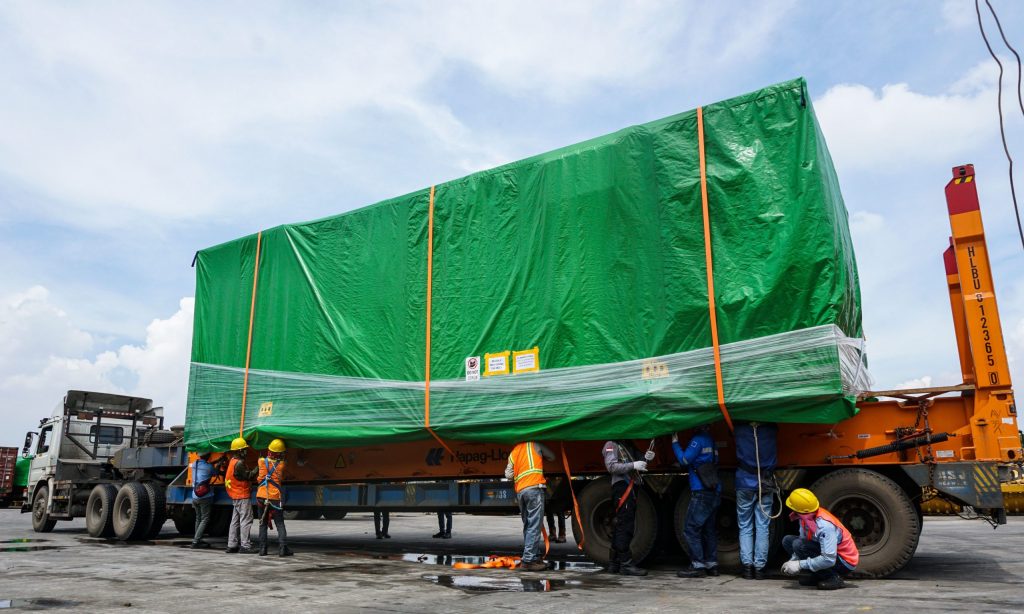
Standardised written checklists convert informal visual inspections into repeatable, auditable workflows. Crews working from checklists identify hazards early and produce inspection records accepted by Port State Control surveyors. The checklist below covers all critical securing elements, from deck foundations to container locking devices.
Pre-Voyage Inspection Checklist
Complete full verification of securing arrangements before vessel departure:
- Verify stowage compliance: heavier cargo placed low, lighter cargo stowed on top, following the approved stowage plan.
- Inspect cargo deck areas for cracks, holes and corrosion which weaken lashing attachment points.
- Inspect straps, chains and other lashing gear for sound condition and proper fastening.
- Confirm even weight distribution; total cargo load shall never exceed vessel load limits.
- Check cargo units for physical damage or contamination prior to loading.
- Cross‑check cargo documentation: cargo description, quantity and destination match physical cargo.
- Inspect trailer equipment: lights, winches and securing straps are fully functional.
Each checklist item takes minimal inspection time, yet prevents costly delays and large‑scale financial losses from cargo incidents. Crews shall additionally confirm full twist‑lock engagement, correct turnbuckle tension and inspect lashing‑rods for bending or cracking to finish pre‑departure checks.
In-Transit and Post-Storm Inspections
Cargo securing work does not finish once the vessel sails. Vibration, rolling motion and temperature changes alter securing forces throughout the voyage. Regular transit inspections stop minor defects from escalating into dangerous failures.
Inspection schedule requirements:
- Pre‑voyage inspection is mandatory before departure.
- Re‑inspect soon after departure; re‑check after heavy weather or unusual vessel movements.
- Re‑tension lashings when cargo settling occurs, particularly on day one of the voyage.
After heavy weather events, inspect and re‑tension securing arrangements to restore system integrity. Log every securing verification inside the official logbook to demonstrate Cargo Securing Manual compliance and satisfy auditor requirements. Consistent checklist execution helps avoid container‑loss incidents similar to the Ever Smart accident.
Common Issues with Cargo Control
Securing equipment is continuously exposed to saltwater corrosion, vibration and heavy loads, leading to gradual degradation even for high‑strength hardware. Crews familiar with typical failure modes can identify risks early and prevent expensive damage.
Corrosion, Wear, and Fatigue
Corrosion attacks metal securing components without advance warning. Salt spray breaks protective surface coatings and reduces the load capacity of twist locks, chains and turnbuckles. Chains appearing sound externally may have hidden deep‑seated corrosion inside links. Inspect all components for wear during routine maintenance.
Metal fatigue accumulates from repeated cyclic loading during each voyage. Fine cracks initiate at high‑stress locations including thread roots and welded joints, growing slowly over time. Regular inspections detect fatigue cracks before sudden catastrophic failure. Monitor for stretched links, deformed hooks and abrasive metal loss.
| Common Cause of Failure | Prevention Measure |
|---|---|
| Damaged or incorrectly engaged twist locks | Verify certification and inspect lashing equipment; remove damaged items to quarantine |
| Use of non-approved or incompatible lashing equipment | Ensure all equipment is approved, documented, and compatible with the vessel’s Cargo Securing Manual |
| Incorrectly declared VGM | Verify VGM with planner |
| Stowage not complying with CSM | Check stack weights and distribution against CSM limits; review lashing arrangements before departure |
Incorrect Tension and Misalignment
Incorrect tensioning remains one of the most frequent cargo‑securing defects. Insufficient tension allows cargo to slide and shift when the vessel rolls. Over‑tension deforms containers, overloads deck fittings and breaks securing hardware. Both conditions create serious safety hazards.
Different tension tools (ratchets, winches, chain tensioners) deliver different pre‑tension forces. Mathematically valid securing plans may prove hard to implement accurately on deck, creating hidden risks. Crews require standardised procedures and calibrated tools to achieve consistent tension levels.
- Insufficient tension: Slack lashings fail to restrain cargo during vessel motion, leading to sliding, impact damage and secondary instability. Solution: apply consistent tension using calibrated tools; double‑check tension after tightening; account for heat‑induced slackening.
- Over‑tension: Excessive force deforms cargo, containers or securing components. Crew members often over‑tighten lashings in an attempt to compensate for uneven cargo weight. Solution: follow equipment‑specific tension limits; use tension‑indicating tools; train personnel to judge suitable tightness.
Misalignment happens when lashing rods are attached at incorrect angles or turnbuckles sit off‑centre. This produces uneven stress distribution and reduces securing efficiency. All securing layouts must match diagrams from the Cargo Securing Manual. Calibrated tools and tension indicators deliver stable, safe pre‑tension values and eliminate over‑tightening risks. Targeted crew training improves recognition of correct lashing angles and tension status, keeping cargo stable in rough seas.
Best Practices for Cargo Control Equipment
Safe cargo securing depends on skilled seafarers and reliable hardware. Even premium equipment fails without regular inspection. Shipping companies should invest equally in crew competency and quality hardware to improve marine safety.
Crew Training and Competency
Provide structured training covering inspection and maintenance workflows. Train crew members to identify damage on twist locks, lashing rods and turnbuckles, and complete equipment inventory reports. Inventory documentation tracks component condition and flags defective gear for replacement.
Training programmes shall include emergency drills for cargo shift and equipment failure scenarios, plus Cargo Securing Manual reviews. Record‑keeping forms a core training competency, as complete inspection logs are required for port audits.
Hold periodic refresher training sessions to maintain skills. New crew members shall receive hands‑on supervision before independent securing work, with senior officers monitoring their initial inspections. Mentorship ensures consistent safety standards ship‑wide and early hazard identification to avoid costly delays and safety incidents. Well‑trained crews form the primary safety barrier against cargo‑securing failures.
Choosing Reliable Equipment and Manufacturers
Hardware quality directly impacts securing safety. Substandard twist locks and chains may break under load and endanger the whole vessel. Source securing equipment from well‑established manufacturers with certified quality‑management systems.
Reputable suppliers hold internationally recognised quality certifications and conduct batch load‑testing on finished products. Their hardware meets specifications defined within your vessel’s Cargo Securing Manual.
Verify certification documents before purchase and request test reports from suppliers. Custom‑designed securing parts require extra validation against your ship’s manual. Manufacturers offering OEM / ODM services can produce components tailored to specific vessel requirements, ensuring perfect fit and reliable long‑term performance. Sourcing certified hardware reduces failure risk and simplifies Port State Control inspections.
No level of equipment quality removes the need for regular securing inspections. Always carry out pre‑departure and post‑heavy‑weather checks. Combined investment in crew training, certified hardware and routine inspection builds a robust safety foundation for container lashing operations and protects crew, cargo and vessel across all sea voyages.
Ongoing maintenance and inspection of cargo securing systems protect seafarers, cargo and vessels. Compliance with the Cargo Securing Manual fulfils international regulatory obligations. Regular inspections detect wear‑and‑tear defects before component failure occurs. Securing maintenance is a continuous commitment, not a one‑off task. Pre‑departure verification and post‑weather re‑inspections preserve securing reliability. Proactive maintenance prevents accidents and improves operational efficiency. Every voyage deserves the same high safety standards. Shipping operators prioritising securing maintenance achieve stronger safety records and lower risk exposure. Investments in preventive securing care reduce incident frequency and deliver smooth, trouble‑free voyages.
FAQ
How often should crews inspect cargo securing systems?
Crews must check securing equipment before departure, shortly after departure, after heavy weather, and after any unusual vessel movement. These routine checks catch loose lashings and damaged components before they create dangerous conditions.
What happens when port state control finds defective equipment?
Port state control officers can detain the vessel until crews fix all issues. Detention costs shipping companies in lost time and repair costs. Fines may apply for repeated violations. A poor inspection record also raises insurance premiums and damages a company’s reputation.
Can crews repair damaged twist locks and turnbuckles?
Crews should not repair damaged securing components. Replacement with certified parts is the only safe option. Field welding weakens metal and creates hidden cracks. Any part showing cracks, deformation, or heavy corrosion must go to quarantine immediately.
Why does documentation matter for cargo securing?
Complete records prove compliance with the Cargo Securing Manual. Inspectors review these logs during port state checks. Documentation also tracks wear patterns over time, helping crews predict when parts need replacement. Good records turn maintenance into a proactive process rather than a reactive one.