Yes, a towing and recovery business can be a profitable company to own. Regular car traffic creates a steady need for these services because drivers require help every day.
| Metric | Range |
|---|---|
| Gross Margin | 50% to 70% |
| Net Profit Margin | 10% to 30% |
According to LookupAplate, about 55,000 vehicles are towed each day in America. This total shows how often drivers depend on professional towing and roadside assistance.
The towing industry is very profitable and offers great opportunities for new investors. Running a continuous 24/7 service creates strong earning potential and lasting financial success. Healthy profit margins protect your cash flow, while smart daily operations ensure long-term stability. Demand for these services stays high through every season of the year. Because of this, owners can build a very reliable towing business in any market condition.
Key Takeaways
- Tow truck businesses bring in great profits because people need their help every single day.
- Special towing jobs pay more money than standard help for broken cars.
- Paying for equipment loans, insurance, and gas are a company’s biggest regular costs.
- Business deals with companies and internet ads give tow truck business owners a steady income over time.
Core Revenue Streams in Towing and Recovery

Every towing company makes its main money through a few primary revenue streams. Fleet operators build strong operational margins by giving routine assistance services alongside specialized recovery options in a busy market.
Standard Towing and Roadside Assistance
Basic service calls form the main base of any daily towing operation. Vehicle drivers need fast help with broken parts, flat tire replacements, battery jump starts, or lockout emergencies every single day. A local towing company delivers essential assistance to meet constant consumer demand across nearby towns.
| Service Type | Direct Fee Range |
|---|---|
| Jump Start | $75-$125 |
| Tire Change | $75-$150 |
| Lockout | $65-$125 |
| Fuel Delivery | $75-$125 |
| Light-Duty Tow | $100-$200 |
Fleet owners team up with auto clubs to get steady work and meet customer demand. Standard towing calls create predictable dispatch volume that keeps workers busy with basic roadside assistance services. Still, routine roadside assistance calls bring in smaller profit margins. Because of this, a modern towing company adds extra roadside assistance offerings to boost total earnings during the year.
Specialized Off-Road and Heavy Recovery
Tricky vehicle pulls offer a great growth chance for fleet owners who want to grow their work. Bad highway crashes, deep mud trails, heavy snow piles, and steep hills need special gear. Heavy recovery services charge higher fees that raise overall profit margins far above normal towing prices.
Pro operators buy strong gear right from trusted B2B wholesale sellers like FTrade. FTrade makes certified kinetic recovery ropes, heavy snatch straps, soft shackles, and snatch blocks for hard job sites. Kinetic recovery ropes use saved energy from controlled stretching to soften sudden bumps and pull stuck heavy trucks safely. Snatch blocks lower winch working load during hard multi-line pulls. Tested gear lets a skilled towing company crew handle roadside assistance safely without risking bad gear snaps during urgent calls.
These hard recovery services earn much bigger profit margins for business fleet owners. Mixing simple vehicle fixes with hard towing and recovery jobs builds a very strong company. High service margins bring long-term success for any commercial business owner.
Operating Expenses and Profitability Factors in Towing and Recovery
Equipment Financing and Insurance Costs
Smart fleet managers study big spending items to guard baseline profitability. Buying equipment takes clear money planning during setup. Buying new light-duty flatbeds takes a total investment between $125,000 and $175,000. Newer used trucks need an investment between $35,000 and $120,000. Lenders give loan terms up to 60 months with down payments from 0% to 20%. Professional operators usually pay down payment sums between $10,000 and $20,000. A modern towing company relies on strict cost controls.
Equipment financing allows towing companies to purchase or lease essential machinery without a large upfront capital outlay.
Insurance costs affect cash flow for every towing company. Insurance makes up 10% of spending across the towing industry. Most insurance companies raised their prices by 28% recently. Full insurance for one truck costs about $450 to $620 a month ($5,400 to $7,440 every year). Average commercial auto coverage costs $737 each month ($8,839 per year). Normal roadside towing policies cost between $4,000 and $7,000 per truck every year. This focus helps each towing company stay stable.
Fleet Maintenance and Fuel Management
Daily service work needs clear repair steps to protect net profit. Regular truck fixes cost between $7,000 and $12,000 per truck every year under regular use. Labor makes up 40% of total costs and went up about 9.12% each year over 3 years. Planned repair schedules keep drivers working for heavy towing operations. Good truck performance protects overall towing business value and keeps margins high.
Fuel costs strongly control daily earnings during emergency towing calls. Fuel makes up 15% of overall costs and went up about 20.7% each year over 3 years. Planning good routes cuts down on extra miles across regular roadside towing services. Fleet managers track driver work to protect business margins, which shapes overall profitability. Controlling main business spending protects every local towing business from market shifts, shields cash flow, aids business profits, and keeps fleet margins strong. A commercial business tracks every cost.
Strategies for Running a Towing Business
Optimizing Fleet Utilization and Uptime
Smart bosses keep their trucks running fast to handle constant work in local areas. GPS tracking tools and organized repair plans speed up driver response times. Quick dispatching helps any professional towing company handle urgent roadside help smoothly. Drivers use wheel lifts with inside controls to load broken cars faster. Lighter tools help save gas, while strong trucks keep workers safe during hard vehicle rescues. Clever work habits help towing business owners protect their trucks.
Owners pack their trucks with tested tools to prevent costly job failures. Hard pulling jobs need certified rescue kits, pulley blocks, and dynamic ropes from sellers like FTrade. Reliable tools cut breakdown risks during tough jobs and shield company earnings. Using the exact same gear on every truck keeps worker training costs low. Smooth daily work creates chances to scale up and supports big company growth. Safe habits help every towing company avoid costly accidents while boosting total income.
Securing High-Margin Commercial Contracts
Adding different ways to earn cash builds real financial safety for modern towing companies. Owners sign steady deals with city offices, police stations, car dealers, and delivery fleets. Smart operators balance their total workload by choosing a smart mix of contracts:
| Contract Type | Ideal Revenue Share |
|---|---|
| Motor Clubs | 50% – 60% |
| Fleet Contracts | 15% – 20% |
| Direct Consumer | 20% – 30% |
Direct calls from drivers make more money than standard motor club roadside help calls. Managers add basic towing options by buying used wheel lifts for $3,000 to $8,000 to catch valuable jobs. High profit margins keep the entire towing business healthy during slow seasonal times.
Good marketing reaches more local drivers and brings in extra towing jobs. Owners use online click ads to gain two dollars for every single dollar spent. Direct mail letters find local clients for around fifty-one dollars per lead. Simple email marketing brings forty dollars back for every dollar spent. Successful towing business owners use these smart tools to boost driver demand and grow long-term. Skilled bosses offer dependable roadside help to win a huge market share. Commercial towing jobs bring steady money, making a towing company a very profitable venture. Great roadside assistance guarantees lasting success for any ambitious towing business owner.
Decision Framework for Potential Towing Business Owners
Evaluating Capital Requirements and Operational Risks
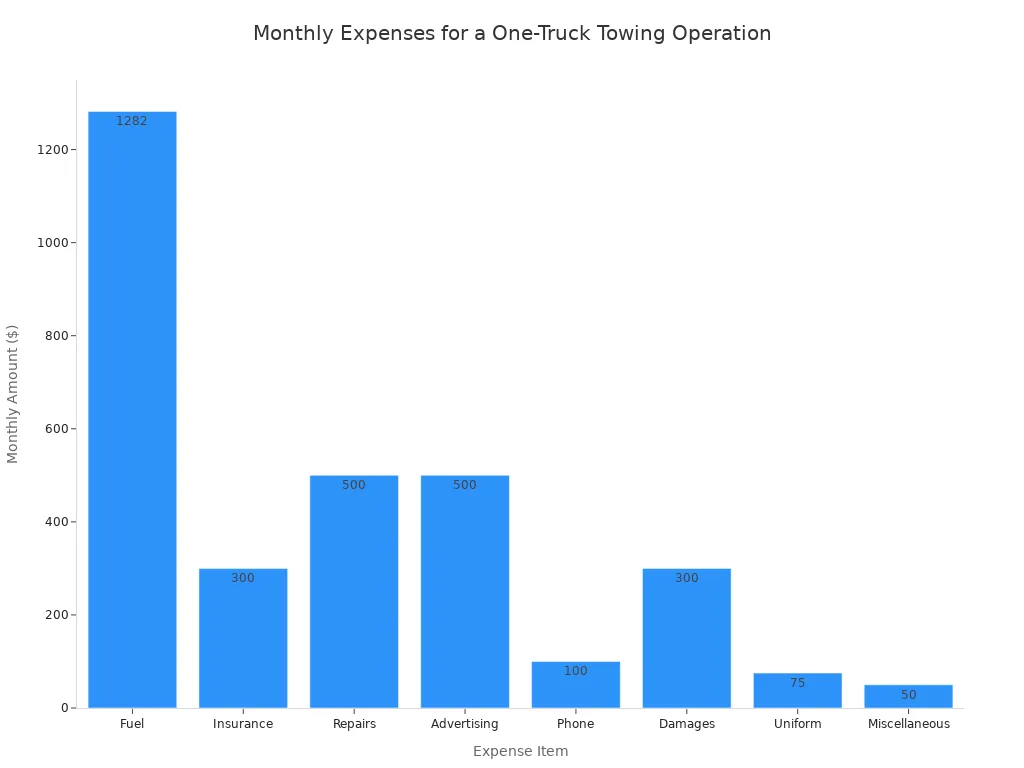
Every entrepreneur needs big savings to launch a local towing company. Buying a brand-new truck takes a starting financial investment up to $200,000, but a reliable pre-owned truck costs near $50,000. Besides buying trucks, operators buy basic gear like flatbeds, amber strobes, spotlights, road flares, cones, jacks, jump boxes, GPS units, and lockout tools. Running one active vehicle means paying around $3,107 in basic monthly operating costs.
| Expense Item | Monthly Amount |
|---|---|
| Fuel | $1,282 |
| Insurance | $300 |
| Repairs | $500 |
| Advertising | $500 |
Job safety hazards constantly test total business profits. Drivers handle extra vehicle scratches, worker mistakes, and wild highway safety hazards during busy traffic days. Bad street weather, rising policy claims, high gas prices, and truck wear strain cash reserves. A careful towing company lowers these bad risks through solid liability policies, driver rest plans, and routine truck checks. This smart strategy keeps a towing business safe from sudden job delays.
Essential Criteria for Long-Term Success
Running a towing business takes steady daily attention. Every towing business owner checks financial reports often to lower bills, re-negotiate shop prices, and protect fleet gains. Fixing old trucks stops costly breakdown delays during hard towing calls. Smart spending choices keep company growth steady while unlocking new money options in the regional towing market.
Building stronger client partnerships guards your regional market spot. A modern towing company promotes its recovery services using modern tools like Google local pages, search ads, and internet platforms. A solid towing company wins direct deals with build owners, roadside clubs, town police, and city offices. Providing trustworthy roadside services and fast emergency aid brings in extra towing calls across the county. Smart plans help a towing business grow strong as a true leader in the towing industry.
A commercial towing and recovery venture offers strong financial rewards. High starting capital is needed to buy heavy rescue trucks. However, financing options save working capital and sustain operations during slow seasons. Modern towing fleets handle emergency towing calls efficiently using certified gear. Strategic towing contracts help stabilize routine income. Strong management unlocks long-term profitability across the entire towing industry.
Every ambitious towing operator faces real risks. Severe road weather constantly tests daily towing work. Quality tools protect towing drivers during complex extractions. Careful business managers maintain fleet upkeep to secure towing calls. Ultimately, running a structured towing business yields lasting commercial success.
FAQ
Is a towing business profitable?
Yes, owning a towing business can bring in great money. Companies often keep 50% to 70% of their cash after paying direct costs. Final profit margins usually range from 10% to 30%. Constant customer demand keeps trucks busy, making this a very reliable business.
What basic help options do towing fleets offer?
Towing drivers give fast roadside assistance for dead batteries, flat tires, empty gas tanks, and locked doors. These simple daily service calls support regular vehicle transport work. Providing quick roadside assistance helps drivers stay safe while bringing steady income to the business.
What initial capital does a towing business require?
New owners need enough starting money to launch their towing company. Buying a new light-duty flatbed truck takes an investment between $125,000 and $175,000. Banks offer loan terms up to 60 months, which helps owners handle these big initial equipment costs easily.
Why do heavy recovery towing operations yield higher profits?
Heavy recovery jobs take special tools to pull vehicles out of tough spots. Drivers manage tricky rescue work in deep mud, heavy snow, and steep hills. Because these specialized services need extra skill, companies charge higher rates that boost overall business profits greatly.